"What I Wanted Was the Money"
The JAC/JAE veteran on the thoroughly unromantic way he fell into stunt work, his move from performer to action director, his conviction that action is acting, and his reunion with Gavan thirty years later, this time as the director of the feature film.
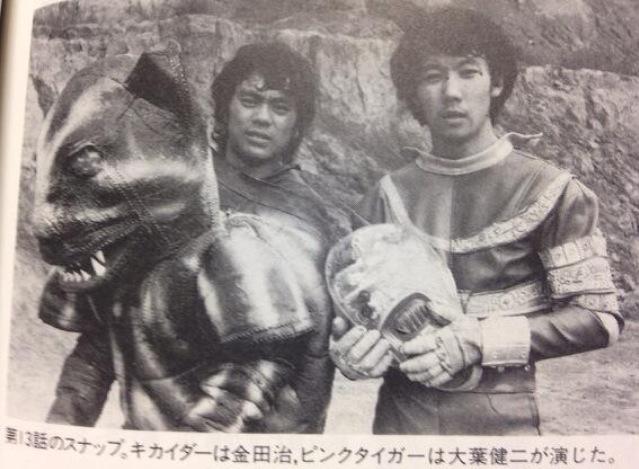
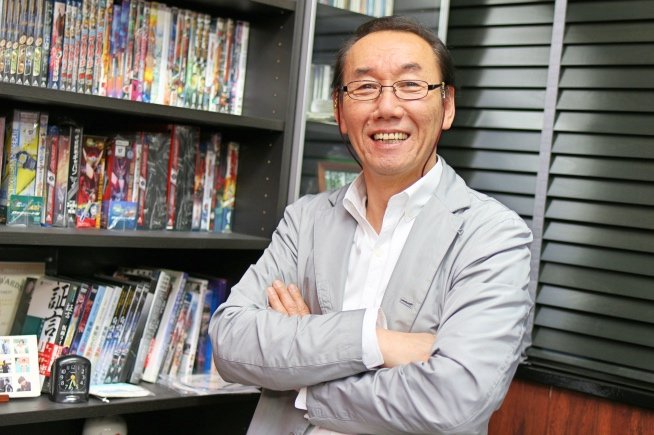
One of the central figures in Japanese screen action: stuntman, suit actor (the performer inside the costume who does the fighting), action director, and director of episodes and features. From Robot Keiji and Condorman to Space Sheriff Gavan, Kamen Rider BLACK, Janperson and Super Hero Taisen. In 2012 he directed Space Sheriff Gavan: The Movie. He is the public face of Japan Action Enterprise (JAE), the company that grew out of Sonny Chiba's JAC.
Editor's note: a complete arrangement of roughly 53 minutes drawn from the official 102-minute edition of Shocker Ono no Himitsu Kichi e Yokoso!!, episode 61 (October 27, 2012). The conversation has been reorganized by subject. Only hesitations and repetitions were cut. Names and titles checked against Japanese sources.
Most people assume you get into this business because you dreamed of being a hero or an actor. How did it start for you?
Young people today watch the heroes on television and think, "I want to do that kind of work." That was not my story at all. I wanted money. I was studying at Tokyo Designer Gakuin and tending bar, and the money never piled up, so I figured a stuntman, doing dangerous things for a living, was probably paid well. I also disliked the idea of studying too much, of repeating the same task forever, of a salaried life running from nine to six.
My older brother had worked as an extra, in small parts alongside people like Yujiro Ishihara, and that was my only connection to the business. I hardly watched television or went to the movies myself. It occurred to me that Toei might be able to tell me who to call. I phoned them, got passed from one contact to the next, and even reached the wrong place, an outfit tied to a different action group, before I finally landed at the Japan Action Club, the JAC.
I could not do anything. All I said was that I wanted to be a stuntman, and the answer was, "Fine, come on over." I even shaved a couple of years off my age. I was around twenty-one and I told them nineteen, because I was embarrassed to be starting out older than everyone else.
"It was never a hero's dream for me. What I wanted was the money."
Kaneda, on his decision to become a stuntmanWhere were you born?
In Niigata, in Itoigawa, at the far edge of the prefecture, close to Toyama. It is a place wedged between the sea and the mountains, without much going on. I fished, played outdoors and got into trouble; in the summer I stole tomatoes and got caught. Tokyo, television and acting never entered my head. I liked moving my body, so I did gymnastics and skiing, though none of that had anything to do with art.
I did not even want to go to high school, since I assumed that if I went to work in Tokyo some opportunity would turn up. My parents insisted I sit the entrance exam, and I went to check the results convinced I had failed, only to find that I had passed. For my school club I chose skiing on the theory that there would be no training in the summer. That was an enormous mistake: there were runs, staircases of hundreds of steps, exercises all year round. Later I picked a design school in Tokyo, where enrollment cost about 100,000 yen, which is why I had to work. In my second year I was swallowed up by the Ginza nightlife. I did not even drink, but I found that world fascinating, and it was an education in dealing with people, though I could see it was not where I wanted to end up either.
When I joined, we trained in the morning and again after the day's shooting: trampoline, gymnastics, falls, fight work. Plenty of senior members came through and taught us. One of my first jobs came from people connected to productions like Key Hunter and Kamen Rider. They took me out on location, possibly to Miyakejima, without nearly enough experience. There was a jump through a window with a big trampoline waiting outside, and the veterans were doing it as though it cost them nothing.
I warned them I had no confidence and asked whether what was set up would be enough. They said it would, but when the moment came nobody was going to do it for me. I botched it, said some foolish things in front of experienced people and made a terrible impression. I was sure I would never be called again. That was when I understood I could not treat the work casually, because without serious training I was going to get hurt. I also discovered that the pay was far lower than I had imagined. Even so, every day was a different place with a different problem, and I began to take pride in being somebody else's invisible strength, since the action existed only because someone in the shadows had taken the risk.
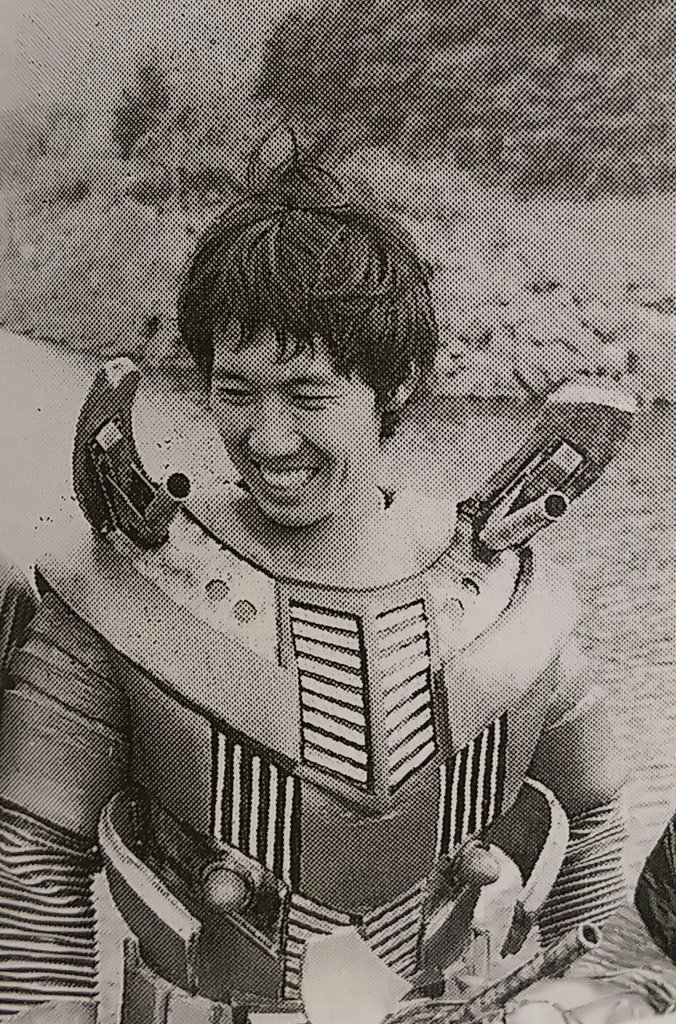
Inside a costume the effort felt enormous to the man wearing it and small on camera. That is why I was constantly told to make the movements bigger. I thought I was already going as hard as I could, and they would say, "More! Make it bigger!" The suit was tight and terribly hot, and in the summer there were days when I could not even eat lunch. Yet when we watched the footage the action still did not look big. It had to be pushed much further than that.
One of the most extreme episodes happened during a shoot for Robot Keiji, where I played the hero K. On a construction site, another performer and I had to get through a large amount of fire, or fight in front of it. Between the noise, the heat and the narrow field of vision the mask allowed, it was hard to tell what was going on. After the director called cut, I found out that the suit had caught fire. The crew pulled the costume off me and checked the damage.
Afraid of how the costume department would react, and still wearing nothing but the suit's inner layer, my colleague and I seriously considered running away from the set. We walked about a hundred meters to a vending machine, bought something to drink and stood there debating whether to quit the job. In the end we went back. I tell the story laughing now, though it says a great deal about how rough that period was. I also did Seigi no Symbol Condorman and other film and television work alongside it. My career as a stuntman and suit actor was short, maybe five or six years. Before long I was running rehearsals and building the action for everyone else.
On Seigi no Symbol Condorman they told us our group would handle the action and that I, being the oldest, should take charge. I had no idea what an action director was supposed to be. I only tried to work out what the director wanted and then worked as hard as I could to deliver it. Because I was at the training sessions every day and helped the others, people started asking me to build movements and fights, and little by little they came to trust me.
I had to learn to talk not only to the performers but to the whole crew. An action director has to explain to the camera operator what he intends to show, and understand how that image will be captured. The camera operators and directors taught me themselves: "Do it that way and it will not read"; "Move it to this side and it works better."
I learned by watching how film and television were put together, why one shot cut to the next and how to break a sequence into pieces. I also started reading the whole script carefully. What is the situation, what is the scene for, what does the audience need to come away with? Once you understand the essential thing, everything else can be arranged around it. I owe that education to the people who surrounded me, to teachers and colleagues including Shinichi "Sonny" Chiba and the men of the JAC, without whom my career would not exist.
By the time of Space Sheriff Gavan, the fight scenes had grown so numerous and so complicated that the job took on another dimension. The credit that used to read tate, the traditional term for designing and staging screen combat, started appearing in a form people could actually understand: "action director" or "action supervisor." To an audience, "tate" did not say much. "Action director" made it clear that somebody was responsible for inventing those sequences and running them. I was proud of that. I used to think, "This is where we do something nobody else is doing."
I never staged a scene simply because it was a hero show. I wanted to find something interesting in it, an unusual use for an object, a movement, an image. When an idea turned into a scene and worked, the satisfaction was enormous, and when it did not work I would go back over it and think about what could be better.
A memorable sequence does not depend only on complicated moves. The final image of a hero can matter more than all the motion that came before it. On Kamen Rider BLACK, for instance, the closing stance had to be beautiful. The action could go by fast, but the frame where the character came to rest had to stay in the viewer's heart. It might be a glint off the mask, a pose, a small gesture. Every week the audience meets the hero again through images like those. I would take a proposal to the director, hear whether the idea served that episode, and adjust it to the shoot. If they asked for something else, I went back and thought again. The variety of the problems was what made the work exciting.
"Even with the face hidden behind a mask, the intention has to be visible in the body. The note I heard most often was: really act."
Kaneda, on what makes a stuntman more than a man who falls downYou always tried to use every professional who was brought to a shoot, newcomers and freelancers included.
I lived through it myself. When somebody is still inexperienced, what he hears is, "Not you, we'll use this one instead." If a person was brought to the set as part of the cast, standing around doing nothing is a sad thing. Obviously you cannot hand a dangerous piece of action to someone who is not ready for it. But there is almost always a safe task that person can carry out. As far as I am concerned, anyone who shows up at the location is a performer, whether or not he belongs to my company. Even with the youngest man there, the director should recognize him as part of the cast and respect his job. During the action you can be hard on him, without ever denying the importance of the man standing in front of the camera.
When I was young I used to help the veterans by carrying masks and equipment. That is how I built relationships, and how I came to work with many of them again three decades later, on the All Riders film the year before and then on Super Hero Taisen.
Coming back to a set with colleagues from thirty years earlier gave me the feeling that we all still belonged to the same story.
At various points we talked about "300," "394," "more than 400," "almost 500" participants. The publicity at the time put it at 485 heroes, monsters and foot soldiers: 50 Kamen Riders, 173 members of Super Sentai, 97 monsters and 165 soldiers. Putting that many people in one place makes everything hard by itself: feeding them, toilets, changing rooms, waiting. At one point hundreds of people were ready, standing in the snow, and the shooting would not start. I complained: "You're making 300 people wait. This can't go on!" The production had a duty to look after everyone who stood out in that cold to make the film.
If 300 people were available, they had to be shown. It would have been technically possible to film 50 and multiply them digitally, or reuse small groups across several shots, but that would not have honored the collective effort. I wanted to be able to say honestly, "Everyone is in there." Even if a given person was on screen for half a second, or one second, or two. We organized them in groups of twenty, sent one running one way, brought another in from the back and had a third fighting in the foreground. Part of the pleasure of building a scene comes from knowing you did not cheat the audience or waste anyone's presence.
There was no time to choreograph every fight in the background individually. The veterans formed small cells, guided the newcomers and put together simple action, while the main team handled the foreground with more precision. A young man who arrived not knowing what to do might hear from a veteran, "Hold your ground, run like you're going to destroy those enemies, and don't stop." That way every corner of the frame came alive. In the quick consultations between groups we even discussed the fighting language of the newer heroes, like Yellow Buster's jeet kune do, which the veterans had to understand in order to stage encounters between characters from different eras. The harsh weather, the cold, the snow and the mud all ended up part of the affection people feel for that shoot.
The power of it came from the fact that it was not all computer graphics: hundreds of suit actors were really out there running and fighting. And you insisted that every one of them be credited.
On older productions dozens of stuntmen might work on a film and only a handful of names would fit in the end titles. I consider that unfair. Even if the names go by too fast to read in a theater or on a DVD, they should be on the record. All 394 action professionals were listed, and my own name turned up at the end of the freelancers' block.
"Even if each of them was on screen for half a second, I wanted to say honestly: everyone is in there."
Kaneda, on the nearly 500 characters of Super Hero TaisenA listener says the Space Sheriff series is his favorite and that he rewatched Robot Keiji, Message from Space, Karate Bullfighter and Sister Street Fighter to get ready for this. He remembers an old video of the JAC camp on Hachijojima, with newcomers jumping off cliffs into the sea, karate, running, horseback riding and diving, and he asks where you trained and whether you had a method of your own.
In the beginning we trained in gyms, with trampoline, gymnastics and falls. But I learned most of it on the set. Training is about building the resources to manage a dangerous situation when one turns up, never about going looking for danger on purpose. I myself spent only about five years as a performer. I moved quickly to the side that teaches and directs, so my experience formed very fast, inside the work.
The preparation gives you the base: orientation in the air, falls, flexibility, strength. After that a person learns to apply those fundamentals to each location. But the hardest skill is acting. A stuntman is there to stand in for an actor, and falling down is the smallest part of it. He has to understand why the character fell, why he jumped, what emotional state he is in, what posture and what expression belong to that moment. Even with the face hidden behind a mask, the intention has to be visible in the body. The note I heard most often was, "Really act." Physical exercise, stretching and weight training help the body react when something goes off plan. The point of training is to build a safe foundation for the acting and for the work on set, and never to perform feats that have no context.
The group training on Hachijojima had aims that went beyond technique. There was probably some excess in it back then, and a few demands that would look harsh today. There was also a test of nerve, a willingness to face something unfamiliar and carry a task through to the end. In a group of a hundred people the skill levels are never equal. The camp does not turn everyone into identical athletes. What it can create is a common will. At the end of the day everybody knows they ran, trained and endured together. Then they eat together, take a bath, hold a meeting and get ready for the next day. Failing is no reason to hide. Everyone fails. What matters is committing to the attempt, understanding the mistake and working out how not to repeat it.
Above all I would stress trust. A dangerous piece of action is never the work of one isolated person. Somebody is holding the mat, somebody is securing the rope, somebody is calculating the fall, and somebody is ready to catch the body if the trajectory changes. The performer can concentrate because he believes in the people around him. Later he has to learn to protect his colleague in turn. One slip can be fatal. That is why a team needs coordination, responsibility and trust that has actually been earned, rather than a group of people who met that morning and decided to try a stunt.
A shot may show only two people while forty or fifty professionals are working outside the frame. Everyone concentrates and does his part so that the image can exist. The JAC and JAE members had a tradition of thanking one another in chorus after a successful piece of action, and that "thank you very much," aimed at the men who held and protected the performer, is the mutual trust of the group made audible.
"A shot shows two people, but forty or fifty are working outside the frame. Film is a collective art."
Kaneda, on trust inside an action teamWhich actors and productions outside tokusatsu, the Japanese tradition of live-action special-effects shows, left the strongest mark on you?
The first name I would give is the Takarazuka Revue, which I worked with for years. Takarazuka is a world of its own. The performers sing, dance and act, and the hierarchy is very strong. At the same time, once rehearsal starts, they all fall into line and do the work. The first time I walked into that room there were about 120 people in it, from the leads to the dancers. Every one of them stood up, greeted me and listened while I was introduced as the man who had come from Tokyo to stage the action.
They were not fight professionals, although they were staging period pieces, Western productions, hand-to-hand fights, punches, kicks and weapon work. What surprised me most was how fast they memorized. I would show a thing once and they had it. They might not execute all of it perfectly yet, but they had to commit the songs, the dances, the lines and the blocking to memory at that same speed.
With seventy or a hundred people in the room you cannot teach every detail indefinitely. I also came to see that it would be a mistake to force them to copy a stuntman's style exactly. Their language was a different one. What I found was that I had to build the action inside the form of Takarazuka itself, and once I found that path the results started working. It was a very different experience from staging fights for conventional actors.
Another name I will never forget is Bunta Sugawara, the lead of the Toei police series Keishicho Satsujinka, the homicide division of the Tokyo Metropolitan Police. My credit was gito, the design and coordination of the staged combat. The title alone was strong. I was recommended for the job because they wanted harder action, in the tradition of Shinichi Chiba's group. Sugawara had a very fixed public image, which made showing another side of him a real challenge. Even at his age by then, he worked with impressive energy.
He had his own particular way of handling a weapon and he committed himself to the sequences. He also treated me with great warmth. When my part of the day was done, I did not go home. I stayed at his side until the rest of the scenes were finished and only said goodbye once his work was over. Sugawara expected the action director to tell him clearly what to do, and that trust raised the stakes for me. The result drew attention precisely because it put an actor everyone associated with another kind of role into a hard-edged police action series.
How did the move from action direction to directing episodes happen?
I did not ask for it. While I was working as an action director I would go out drinking with producers and other members of the crew, and some of them would say, "Kaneda, you could direct. Give it a try." I would answer, "Don't make fun of me, I never studied for that." Months later the invitation came back, this time as a concrete offer. Everybody was behind the idea. I kept saying no, and they put me in the chair anyway.
I never had the arrogance to think I could take a director's place. Up to then my job was to ask what action he wanted and propose a way of doing it. Once they handed me an episode, though, I could not show up looking unsure and asking how everything was done. I pretended I knew, thought about the image I wanted and learned as I shot. The conversation runs through Tokuso Robo Janperson, but Toei's own professional biography lists Juko B-Fighter as my directing debut. The camera team, the assistants and the production staff already knew me and helped me enormously. On that first chance they gave me some extra room, because I still could not judge shooting time accurately. At the end of each day I would look at what had worked and what needed to change.
Even decades later I still introduce myself as a first-time director. Some people joke and call me master, and I do not like it. Every production ends, and the next one is a new production. There may be colleagues you know and others arriving for the first time. The relationship with the crew has to be built again from the start. That is why on every job I feel as though I am beginning.
With Space Sheriff Gavan: The Movie just released, you are back with the hero. Thirty years ago you were the series' action director, and now you are directing the feature.
It was fun, nostalgic and moving. Thirty years earlier I had worked on the series as action director, and now I was steering the feature as its director, with Yuma Ishigaki as Geki Jumonji, the new Gavan, and Kenji Ohba back in the role of Retsu Ichijoji, the original one. For a while there were only vague remarks going around: "A Gavan movie would be nice," "It might work." Nobody was saying it would really happen. When the project became concrete, I was surprised and deeply honored.
The film was conceived as the passing of the baton from the original Gavan to the new one. I wanted the audience to accept the successor as a character with a future of his own, without losing the inheritance built thirty years earlier. It makes me happy to see children today recognize the character after his appearances in Go-Busters and in other promotional work.
The original Gavan armor was already an unprecedented design, belonging neither to the Kamen Rider mold nor to the Super Sentai one. In the 1980s there were separate suits for close-ups and for action, and the version worn in movement had limitations you could see. On the new film the materials had improved to the point where practically the whole uniform could be shown up close. That quality created another problem, though: the suit reflected in every direction. The camera, the equipment and the crew all showed up in the armor. At first we tried to hide everything during the shoot, but that started restricting the framing and the movement. On many shots we had to film normally and erase the reflections digitally afterward. Perhaps 80 percent of those elements were removed in post-production. That same shine explains why Gavan still photographs so well: the light produces a powerful effect and helps the hero look futuristic three decades on.
On the original series the Maku Space, the alternate dimension where the battles happen, was solved by hand: a half mirror, miniatures or illustrations, including the image of Saturn's rings, and precise alignment between the actor, the camera and the layered elements. The composite had to be finished on the set itself. The camera could barely move, because any change threw the alignment off. There was no money to use effects freely, and yet shooting it all in an ordinary way would have been dull. Gavan was entering a different space, and changing the color of the image was never going to be enough. We had to invent something the audience had never seen and figure out how to pull it off right there.
The Laser Blade is another example. Instead of creating the whole blade through optical compositing, we used a fluorescent tube. I resisted at first, since a normal sword has a point and a defined edge while the tube was rounded and thicker. On top of that, wires had to run through the suit and out through the legs, connected to a system triggered at the right moment. There were several versions of the prop, and on certain shots the smoke and the framing helped hide the cables. The technology kept improving across the series, which allowed steadily more complex weapons. On the new film, CGI offered far more freedom and a much better finish. Even so, I tried not to turn everything into a digital effect. We needed a contemporary Gavan that still kept the atmosphere of the old one, including in the scenes where the classic Gavan appears. We used computer work when it was genuinely necessary, or when it could produce something impossible any other way. For the rest, we tried to move objects and stage the action physically in front of the camera.
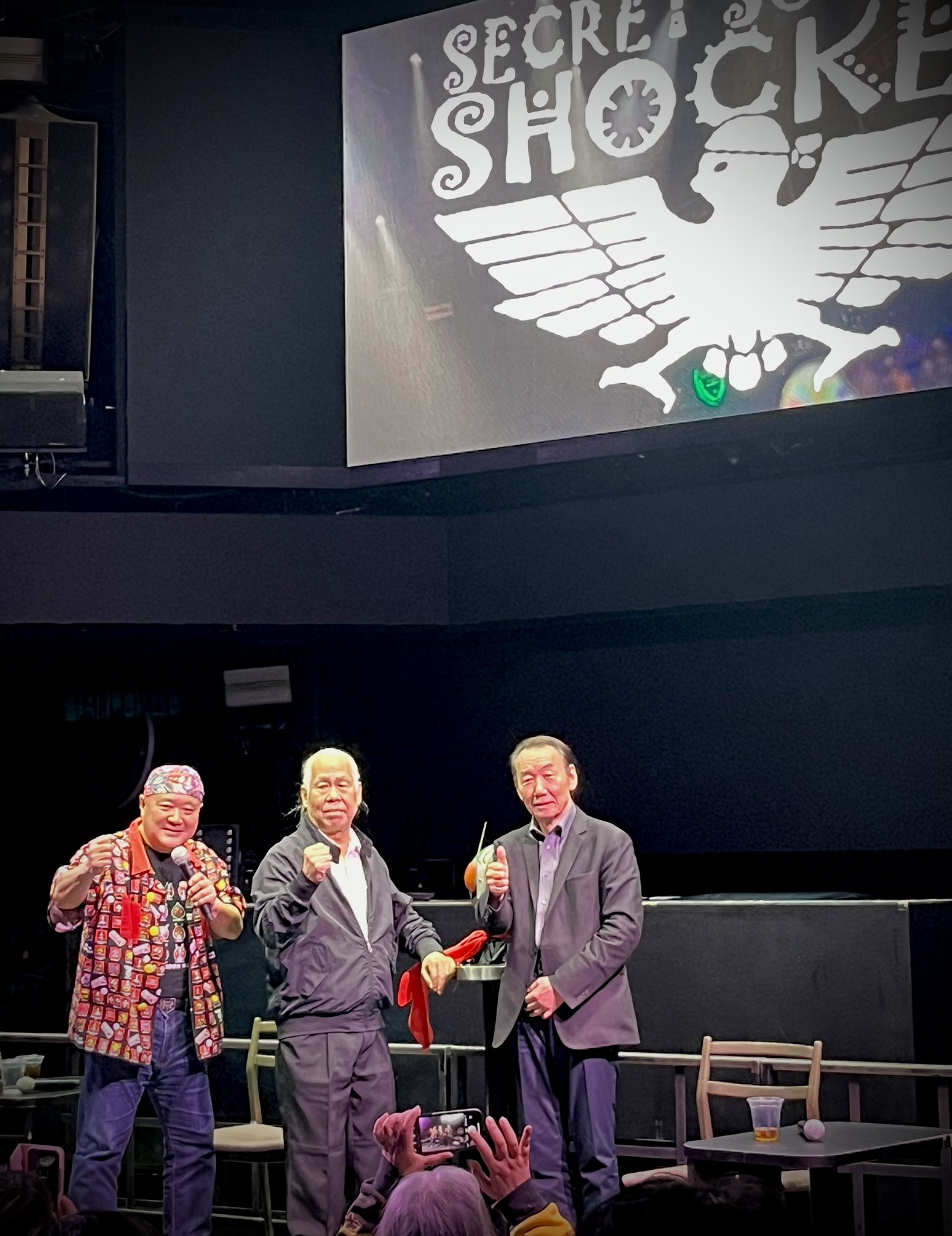
The Gavan design still holds up: the metal armor, the use of light and the silhouette all remain strong in contemporary film. And I place a lot of value on the musical cues. For anyone who followed the original series, a single pose or the entrance of a particular character is enough to bring the old theme straight back. The film keeps those signals because they are part of the audience's emotional experience. The appearance of Dol, for example, works as more than spectacle, because it triggers a memory already recorded in the people who grew up with the hero. I recommend seeing the feature in a theater, where the scale, the sound and the action have more impact. I would like a sequel. If I were given another chance, I would take the work up again gladly, this time exploring the new Gavan as an established lead in his own right.
There was also talk of a possible return for other Metal Heroes and of the Metal Hero Tamashii 2013 concert, set for January 6, 2013 at Shibuya O-EAST, with Akira Kushida, Isao Sasaki, Takayuki Miyauchi, Tatsuya Maeda, Shinichi Ishihara and Nobuhiko Kashiwara, plus Kenji Ohba and the composer Chumei Watanabe as guests. Thank you for sharing your story.
Classic characters could be given new opportunities, and the moment does seem to open a path toward a new era for the franchise. Hearing a song brings the character back into your imagination as well. Concerts like that one can strengthen the audience's interest and create the conditions for new productions. Let this be the beginning of a new phase for the Metal Heroes.
The show announced the November 21 release of Tokumei Sentai Go-Busters: Rising New Hero in a Director's Cut directed by Kaneda: Missions 15 ("The Golden Warrior and the Silver Partner") and 16 ("The Man Who Came from Subspace"), with more than seven minutes of footage that did not fit the television broadcast, which is unusual for TV episodes. Official credits: script by Yasuko Kobayashi, action direction by Hirofumi Fukuzawa and special effects direction by Hiroshi Butsuda.
Action has to be acting. Falling, jumping or fighting only means something when it expresses the state the character is in.
A shot is collective. The man holding the mat, tying the rope or protecting the performer takes part as much as the one on camera.
Everyone deserves to be seen and credited. If somebody was called to the set, the director should include him safely and with dignity.
Every production is a new beginning. Experience does not remove the need to listen to the crew, learn again and treat the next production as a debut.
That is how a young man from Itoigawa, mostly interested in escaping a routine and making some money, ended up helping to define the visual language of several generations of Japanese heroes.
The conversation above is one of the main sources for our career profile of Kaneda: the boy from Itoigawa, the Robot Keiji suit that caught fire, the invention of the action director's job on Condorman, the fluorescent tube that became the Laser Blade, the 485 heroes of Super Hero Taisen and the presidency of Japan Action Enterprise, all in order, with photographs, a timeline and the four pillars of his method.
Profile · Suit Actors section · about 25 minutes
Read the profile →